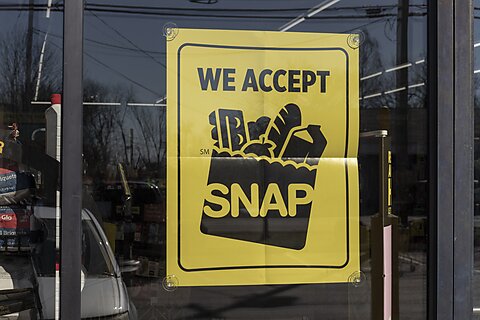
The Supplemental Nutrition Assistance Program (SNAP) costs federal taxpayers more than $110 billion a year and is vulnerable to at least 10 types of fraud. Some types of SNAP fraud have ballooned in the digital economy.
Card “skimming” has plagued SNAP and may have cost billions of dollars over the years. The government deposits food stamp funds onto electronic benefits transfer (EBT) cards, which recipients then redeem at retail stores. Criminal gangs are slipping card readers onto store EBT terminals, stealing personal data, and then emptying recipient accounts.
Nextgov/FCW reports: “Over 670,000 households receiving SNAP assistance had their benefits stolen between the beginning of 2023 and the end of 2025.” Recipients are “vulnerable to transnational crime rings that have taken hundreds of millions of dollars in benefits in recent years.”
One of the SNAP crime rings active in the United States is based in Romania. In December, a 19-year-old Romanian national was sentenced to prison for installing skimmers on EBT terminals at stores across Mississippi. He and his co-conspirator were caught, but such cases illustrate how easy it is to use technology to steal from government programs.
Another recent SNAP fraud piece caught my eye: a federal worker in the US Department of Agriculture (USDA) anti-theft unit facilitated $66 million of SNAP theft!
The USDA distributes SNAP benefits, and it also licenses EBT terminals to food stores across the nation. Long-time USDA employee Arlasa Davis:
abused her privileged access to federal systems to sell hundreds of Electronic Benefits Transfer (“EBT”) license numbers to co-conspirators. Davis photographed handwritten lists of license numbers intended for qualifying stores with her personal cellphone and funneled them to an intermediary who sold them to co-conspirators, who in turn used those license numbers to fraudulently obtain EBT terminals for stores that were not authorized by the USDA to process SNAP transactions. In return, Davis received substantial bribes.
The $66 million theft was “one of the largest food stamp frauds in US history.” Davis was sentenced to two years in prison.
The good news about EBT skimming is that the states could fix the problem by putting SNAP benefits on chip cards. The bad news is that the great majority of states have not done so. To the states, SNAP benefits are free money from Washington. The states are also probably waiting for the Feds to pay for the switch to chip cards. Federal funding breeds state irresponsibility.
That is what we are seeing in Minnesota, but rip-offs of federally funded programs are a problem nationwide. Aid-to-state programs combine lax state administration with distracted federal policymakers who borrow and spend endlessly.
The Trump administration is cracking down on fraud in some Democratic states, but increased program integrity is needed in Republican states as well. For its part, Congress should target aid-to-state programs for major reductions. If the states funded benefit programs by themselves, spending would be leaner with less fraud and waste.