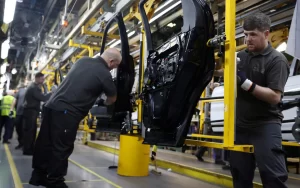
The Transport Committee has called on the Government to seize “once-in-a-generation” opportunities to secure the future skills pipeline for the UK’s transport manufacturing sector, amid mounting shortages and the rapid shift to cleaner technologies.
In a new report published today, MPs warn that manufacturers across aerospace, automotive, rail and maritime industries are struggling to access the skilled workforce they need at a time when the transition to net zero and advanced engineering is fundamentally reshaping job requirements.
The Committee says the UK’s long-standing strength in producing cars, buses, aircraft, trains and ships is at risk unless vocational training, apprenticeships and workforce development are better aligned with modern industry needs.
Evidence to the inquiry highlighted acute skills gaps across multiple subsectors, with witnesses stressing that the move towards electric vehicles, alternative fuels and digital systems has transformed the nature of manufacturing roles. MPs concluded that current training pathways are too slow to adapt and are failing to attract enough young people into what should be “lucrative and fulfilling” careers.
To address this, the report urges the Department for Transport to carry out a comprehensive assessment of how well the UK’s vocational training system is meeting the needs of transport manufacturers. The findings should then be shared across government to inform reforms to skills pathways.
The Committee also calls on Skills England to consult on the introduction of a “competency passport” that would formally recognise transferable skills, making it easier for workers to move between roles and subsectors within transport manufacturing.
While acknowledging the Government’s intention to rebalance funding towards younger workers, MPs expressed concern that the removal of funding for level 7 apprenticeships for people aged 22 and over could undermine the supply of experienced, highly skilled workers. The report supports calls, echoed by the Education Committee, for level 7 funding to be reinstated across the eight growth sectors identified in the Government’s Modern Industrial Strategy.
The report also examines the apprenticeship levy system. Although manufacturers broadly support the principle of the levy, MPs say restrictions on how funds can be spent are limiting employers’ ability to invest effectively in skills. The Committee recommends greater flexibility under the forthcoming Growth and Skills Levy and suggests the Government consider linking access to levy funding to employers’ progress against their own diversity targets.
Addressing gender imbalance, the report highlights the under-representation of women in transport manufacturing and calls for stronger accountability. It recommends that employers receiving levy funding report annually on uptake by people with caring responsibilities or those returning from career breaks, and that the Government review progress towards its target of women making up 35 per cent of the advanced manufacturing workforce by 2035.
Ruth Cadbury, chair of the Transport Committee, said the sector was at a pivotal moment.
“The UK’s track record in transport manufacturing is something to be proud of, but the sector faces an array of challenges,” she said. “We need to harness the talent we already have while making sure the next generation sees this as a sector full of opportunity.”
She added that outdated training routes risk pushing young people away just as demand for skills in electric vehicles and alternative fuels accelerates. “If we don’t act now, other nations will motor ahead while we stand still,” she warned.
The report concludes that without urgent reform to training, funding and workforce mobility, the UK risks missing out on growth opportunities in transport manufacturing, particularly in net zero technologies, at a time when global competition is intensifying.
Read more:
Transport Committee urges action to secure skills pipeline for UK transport manufacturing