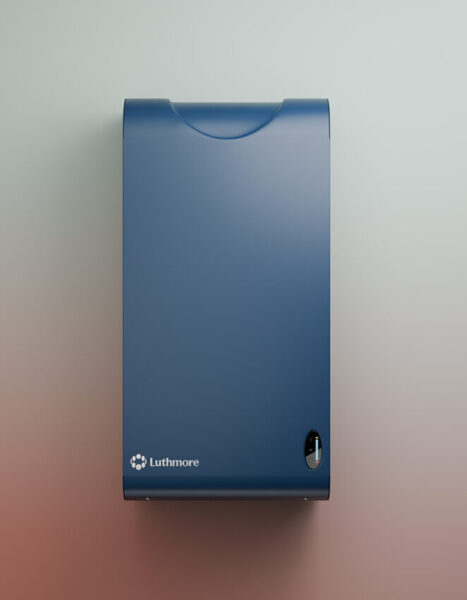
A pair of former Dyson engineers have raised millions of pounds to bring a battery-powered electric boiler to market, positioning it as a lower-cost, lower-disruption alternative to heat pumps for millions of UK homes.
Wiltshire-based Luthmore was founded in 2022 by Craig Wilkinson and Martin Gutkowski, both ex-Dyson engineers who previously worked together on projects including the vacuum maker’s abandoned electric car programme. Their ambition is to replace gas combi boilers in small and medium-sized homes with an all-electric system that fits into the same space and delivers comparable performance.
The start-up has now raised £12.4m in total funding, including a recently closed and heavily oversubscribed £5.5m round. Backers include housing developers, residential management companies, plumbing groups and high-net-worth individuals, alongside a £1m investment from the British Business Bank via the South West Investment Fund, delivered by The FSE Group.
As part of its next growth phase, Luthmore has also appointed Hervé Dehareng, a former senior innovation director at Dyson, as chief executive. Dehareng led global launches of flagship Dyson products including the hand dryer and bladeless fan, and has previously held senior roles at Accenture.
“I want to make the Luthmore boiler the electric vehicle equivalent for home heating within three years,” Dehareng said.
Unlike heat pumps, which often require significant insulation upgrades, larger radiators and outdoor units, Luthmore’s boiler is designed as a near drop-in replacement for a gas combi. The unit is the same size as a standard boiler and uses lithium iron phosphate (LFP) batteries to store electricity when it is cheaper — such as overnight or from solar panels — and release it at higher power during peak demand.
The system delivers hot water at up to 30kW and central heating at 10kW, without the need for a hot water tank or radiator replacements. According to Wilkinson, this makes it suitable for flats and terraced homes where space constraints or upfront costs make heat pumps impractical.
“There’s a substantial number of homes where a heat pump is not going to be appropriate,” he said. “Our boiler can fit in the same space as a gas combi and give similar performance, without the upheaval.”
The company estimates its target market at five to six million UK homes, particularly smaller properties transitioning away from gas.
While Luthmore’s boiler undercuts heat pumps on upfront cost — expected to retail at around £4,500 compared with £13,000 for a typical heat pump installation — its founders are candid about the challenge posed by Britain’s energy pricing.
Electricity remains significantly more expensive than gas under Ofgem’s price cap, meaning the running costs are higher. Luthmore estimates annual heating and hot water costs of around £667 for a typical two-bedroom flat, compared with £444 for a gas boiler and £556 for a heat pump.
“That’s the reality of the UK energy system right now,” Wilkinson said, adding that levies and network charges placed disproportionately on electricity risk undermining the transition to electrified heating.
The funding round and leadership appointment come as the government prepares to publish its long-awaited Warm Homes Plan and implement the Future Homes Standard in 2026, both of which are expected to accelerate the shift away from fossil-fuel heating.
Gas boilers have already been banned in new homes, and while Energy Secretary Ed Miliband has stepped back from an outright ban on gas boiler replacements by 2035, ministers remain under pressure to expand low-carbon heating options.
At present, only heat pumps qualify for grants of up to £7,500 under the Boiler Upgrade Scheme, though officials have said they are still exploring the role of alternative electrified systems.
For investors, Luthmore’s pitch is about pragmatism rather than purity. “With regulatory tailwinds, a strong patent portfolio and early traction with developers and installers, we see a compelling pathway for Luthmore to help households cut emissions,” said Ralph Singleton of The FSE Group.
Whether battery-powered boilers can scale fast enough — and overcome the electricity-gas price gap — remains an open question. But with more than £12m raised and a growing policy push to decarbonise homes, Luthmore is betting there is room in the market for an electric option that sits somewhere between gas boilers and heat pumps.